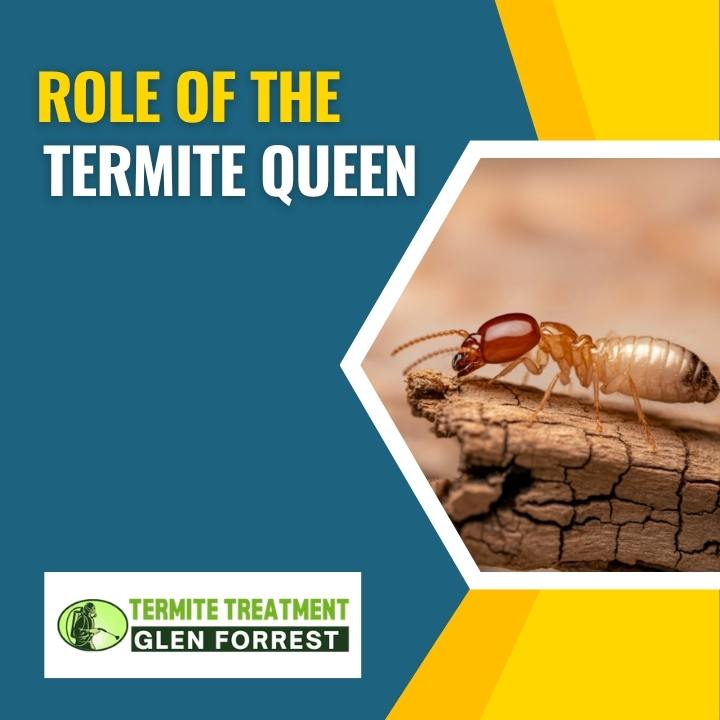
The Hidden Role of the Termite Queen in Colony Growth
A colony of termites does not just grow by chance. Beneath its tunnels, mud tubes, workers, soldiers and covered or concealed nesting chamber is one member which exerts more control over the fate of a colony than any other: a termite queen. She is more than an egg-laying insect. She is the biological motor that lives entrenched, ordering and perpetuating the colony.
The queen typically starts life as a winged reproductive (alate) termite. Following a nuptial flight, she mates with a king, loses her wings and colonises on the ground, inside wood or another safe nesting location. During the initial phase, this colony is not too large. The queen lays only a few eggs at first, and the first young termites stay to help build the nest.
With the rest of the colony more mature, the role of the queen grows powerful. Reproduction, the production of eggs, is her primary function, but her effect extends well beyond that. Helps set the caste system of the colony. This system consists of workers, soldiers, nymphs, alates and sometimes secondary reproductives. Termite queen pheromones potentially modulate reproduction and regulate colony structure.
The passive worker termites rely on the queen, as she breeds the new generation. These workies collect cellulose out of wood, paper, roots and plant material. They care for larvae; cleave tunnels, fix nest damage, and guard the royal room. The lack of a reproductively evolved queen worker, at some point, causes that nest's current worker base to gradually crumble and its generating capacity to erode.
Even the soldier termites depend on the queen, albeit indirectly. Soldiers defend the colony against ants, predators and environmental hazards, but are not food gatherers. Workers must feed them. The colony is able to sustain the population of workers and soldiers at the same time because the queen can produce a constant number of new termites.
One of the elusive castes of the termite queen is chemical (hold down). Using her pheromones to signal through the colony. These signals can influence whether termites become workers, soldiers or reproductives as well. This keeps the colony balanced. Food collection fails if there are too many soldiers developed. A colony has the potential to over-expand because if you have insufficient troops, a colonist will become very easy prey.
Certain termite species will have secondary or additional queens in the case of older colonies. These additional breedings can assist egg production and allow the colony to branch out into satellite nests. In fact, this is one reason that termite infestations can be difficult to get under control once they become established.
Time also changes the queen's body. Her abdomen grows as she fills with eggs, something that happens in many of the species. She might lose most of her mobility and will remain deep inside the nest. Workers brood over her, wash her, transfer eggs and feed her via trophallaxis (a food-sharing behaviour seen in socialists).
It also explains the failure of traditional surface-level termite control, as this reproductive system remains hidden. Even if you kill all visible termites, there is no guarantee that the queen is dead or that hidden eggs and larvae or a hidden nest have been breached. So as long as the reproductive centre stays alive, a colony can keep on growing. Termite inspection, control of moisture, baiting systems, soil treatment and timber protection are some important long-term management techniques.
For homeowners, the queen is a strong reminder that not all termites are random pests. They are highly social insects with a well-ordered colony structure. Detecting a colony at an early stage is important because controlling such a serviceable colony with only thousands or millions of members is more manageable than controlling the mature reproductive group. As a side note, it is interesting to know that some more advanced groups of termites can belong to enormous colonies, and pheromones are involved in their caste system control.
Global Termite Treatment Glen Forrest offers all pest control services in Glen Forrest and surrounding areas.
Contact us at (08) 6275 6525 or visit our website:
https://globaltermitetreatment.com.au/
